
How Drought Brought an Unexpected Path to Peace among Clans in Somalia’s Central Regions
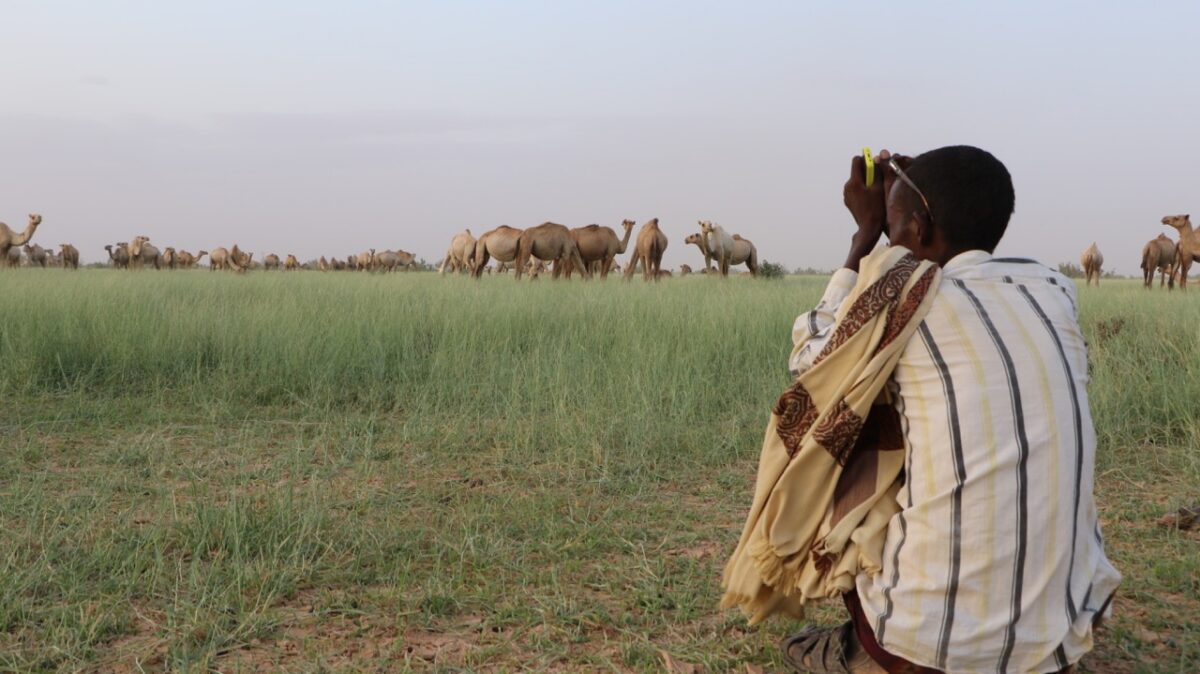
Photo Credit: Horseed Media
Drought is often considered a driver of conflict among pastoral communities. Somali society, which is overwhelmingly pastoral, frequently experiences drought—especially as climate shocks increase. Lack of water means scarce food and pasture and increased competition for limited resources. Drought is commonly understood to be related to clan conflict.
This post presents a different perspective. It highlights the cooperation, dialogue, and integration fostered by recurring droughts among rival communities in parts of Mudug and Galgaduud. This development serves as a reminder that environmental crises create opportunities for both collaboration and competition.
The invisible clan borders
In Somalia, land is largely divided along clan lines. In the central and northern regions, clan integration has been limited except for intermarriage, which still exists. Each clan occupies territory that it believes to be inherited from its ancestors. Since the breakdown of social trust due to the collapse of the central government in 1991, no clan has allowed another to enter or use its declared territory without permission. Clan boundaries may not be visible or easily understood by academics, urban communities, or outsiders, but they are clearly observable and considered non-negotiable among nomadic pastoralists.
The details in this piece are drawn from publicly available information and from my personal experiences over the last two years in Somalia’s central regions. In 2024, I visited the Galgaduud region and had informal discussions with community members, including elders and middle-aged residents. We talked about inter-clan conflicts, droughts, and how communities manage disputes during difficult times.
Members of these communities confirmed that the increased frequency of recurring drought in recent years has made life more challenging for pastoral communities. Many families, despite losing large numbers of livestock in periods of little or no rainfall, have chosen to remain in their own territories. For them, moving to neighboring areas with more precipitation during the rainy season was not an option; such a move would constitute trespassing, and hence would be a recipe for conflict and for settling old scores.
With these experiences and interactions in mind, in 2025 I visited Western Mudug, where two clans had engaged in prolonged armed conflict. Most of those to whom I spoke pointed to land disputes as the reason for the fighting. Only a few highlighted the competition over pasture and resources as having triggered the violence.
Pastoral communities are wary of another clan attempting to invade or encroach on their land. Interestingly, I heard the same argument from leaders of opposing clans, who both claimed to be defending their own territory from an offensive. In other words, the conflict appeared to be driven primarily by competing claims of land ownership and territorial control.
In May 2026, northern Somali regions and the border of Ethiopia recorded some rainfall. The scorching conditions in Mudug and Galgaduud, which remained dry, forced some communities to attempt crossing the land of neighboring clans. By early June, the drought had worsened. People worried about the survival of their animals and even their own future. Any hope of rain had nearly disappeared. Living conditions worsened. Migration became a matter of life and death.
Left with no option, people began moving into the territories of other clans. They loaded their livestock into lorries, transporting them to the far north, particularly to the Togdheer and Sool regions of North State and Somaliland. Surprisingly, despite their deep animosities and apprehension, some clans offered safe passage to their affected rivals.
Clan rivalry and the dynamics of the conflict
To understand the dynamics between rival clans and how these unprecedented events unfolded, I distinguish between the broad and the narrow senses in which clan identities are understood. Under the broader clan umbrella, the Dir, Daarood, and Hawiye have disputes over land. However, there are multiple conflict zones among rival sub-clans, such as Dir and Mareexaan in Galgaduud, Sacad and Leelkase in Mudug, Saleebaan and Mareexaan in Galgaduud, and Dir and Sheekhaal in Mudug.
All the above-mentioned clans occupy Mudug and Galgaduud. All have experienced two consecutive seasons of drought with no rainfall in their respective areas. This brings to mind the poem that says “Ruuxii Ilaah caasiyoo, caabud laga waayo cirka, meesha kaga aaddan waa curasho diidaa.” This is roughly translated as “If somebody’s disobedience to Allah becomes prevalent, the sky over the land stops raining.”
What is striking about these conflicts is that repeated attempts at resolution by authorities, elders, and other community members ultimately failed, and in recent years no new peace initiatives have been underway at all. Peace advocates seemed to have grown discouraged and let incidents take their own course instead. Movements, local leaders, and community peace efforts largely stopped pursuing reconciliation, worn down by peace agreements that had been made many times before, only to be broken again and again.
In early June 2026, conditions became extremely difficult, and all clan borders opened unconditionally. Even adversarial clans started helping one another, moving their livestock together into the Togdheer and Sool regions. Everyone gained access to pasture and water without grievances.
This cooperation is a testament to the kindness and decency of Somali communities. It shows their ability to maintain goodwill during hard times and their willingness to share resources and water under difficult circumstances.
The Somali people have a long tradition of helping one another, of hosting guests, and of showing kindness in times of difficulty. Some believe that Somali conflicts—particularly among nomadic communities—often arise during times of prosperity, driven by boastfulness or arrogance. To the contrary, in mid-2026 most of the adversarial clans gathered in the Togdheer region. Peacefully sharing food, pasture, and water, they helped one another. So far no incidents or frictions have been reported.
Lessons for the future
The Somali people, especially those living in the central regions, can learn from the experiences of recent years. When we reflect on the consequences of killing one another without justifiable reason, we should recognize the suffering caused by bloodshed, pride, and arrogance. These hardships have coincided with prolonged regional rainfall shortages. The resulting drought ultimately forced humility, cooperation, and sharing of the limited areas that received adequate rainfall.
This is an opportunity to engage in timely dialogue, to forgive one another, and to strengthen reconciliation efforts before clans return to their regions. Doing so can preserve the benefits of the natural peace that has fostered this cooperation. This is an opportunity to apply what the people of Mudug often describe as “Xalay Dhalay.” Loosely translated, this means “Born last night.” It refers to someone who has committed no crime and who expects no grievance to arise in the future.
Forgiveness is not new in human history. As we know, Prophet Yusuf forgave his brothers and said to them, “There is no blame upon you today.” Learning from his example, our communities should embrace forgiveness and open a new chapter of cooperation, integration, and mutual support. By letting go of past grievances, we can build stronger relationships and work together toward a more peaceful and prosperous future.
Author: Abdullahi Said, Researcher, Heritage Institute for Policy Studies.
Disclaimer: This blog reflects the views of the author and not those of the Heritage Institute for Policy Studies.
- Category: Blogs